Project Overview
Viridity Energy seeks to transform how large energy customers interact proactively and productively with the electric grid. Engaging in these activities requires a relationship with ISOs, an independent organization formed by the Federal Energy Regulatory Commission to operate and control the electric transmission grid. An ISO is a neutral party responsible for the management and control of the electric transmission grid in a state or region. Two types of financial settlements occur due to market participation, Day-Ahead and Real-Time.
This project was envisioned for both NOC operators, who make key decisions regarding market participation, and the Energy Settlements team. That team relies on a set of complex rules within the ISOs to analyze trends and data. Both teams have parallel specific needs: to view reports, enrollments, and settlements.
phase 1
project kickoff meeting
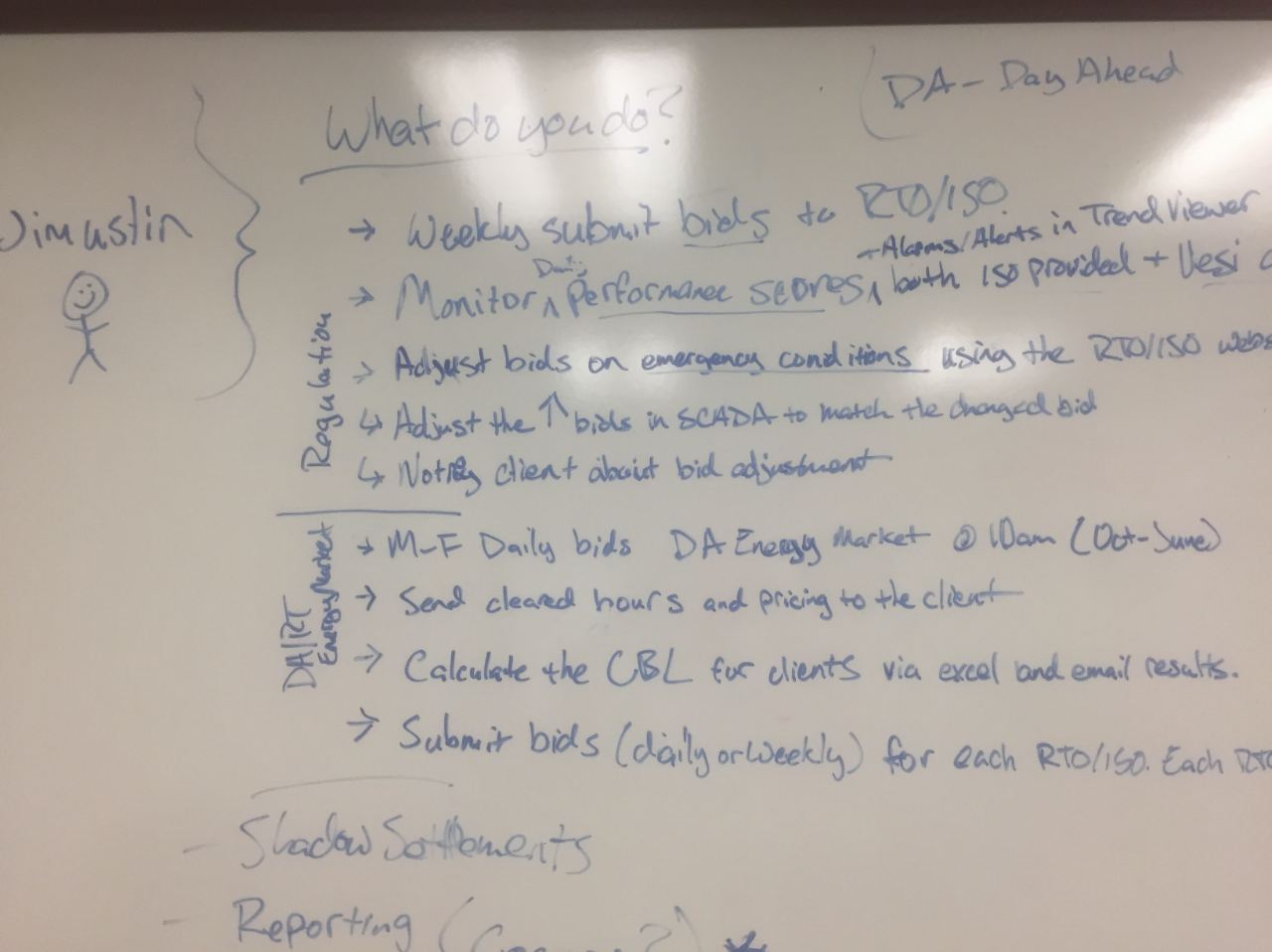
Meeting attendees were the following:
Technical product team members (our Manager, the Systems Analyst, myself),
One SME from both the NOC and financial Energy Settlements team
On a whiteboard, we captured answers to the question, “What do you do?”.
phase 2
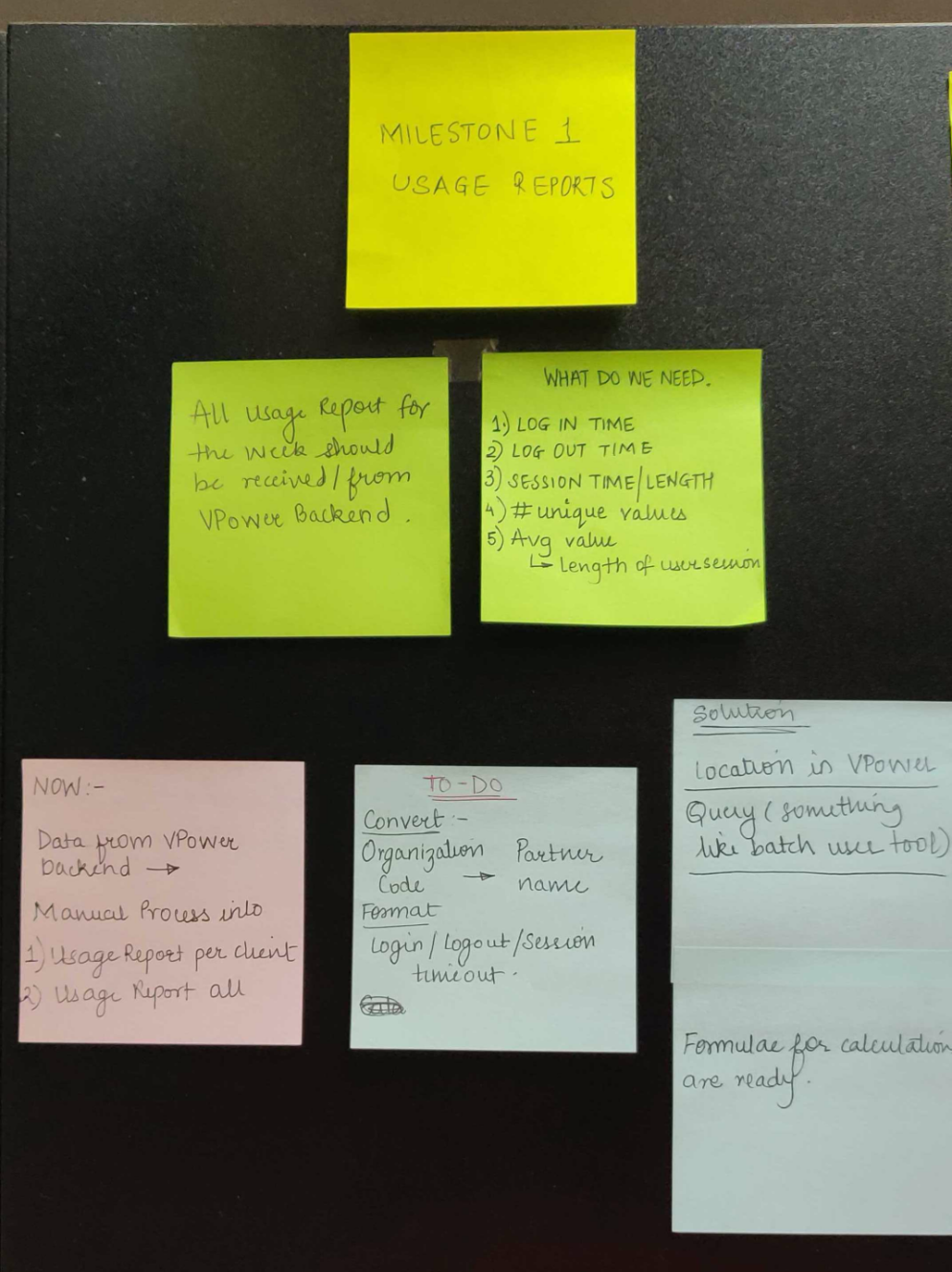
collaborated with system analyst
Our Systems Analyst was a remote employee. We met to compare notes from our kickoff meeting and begin the process of identifying Milestones for the first phase of the project.
phase 3
user research
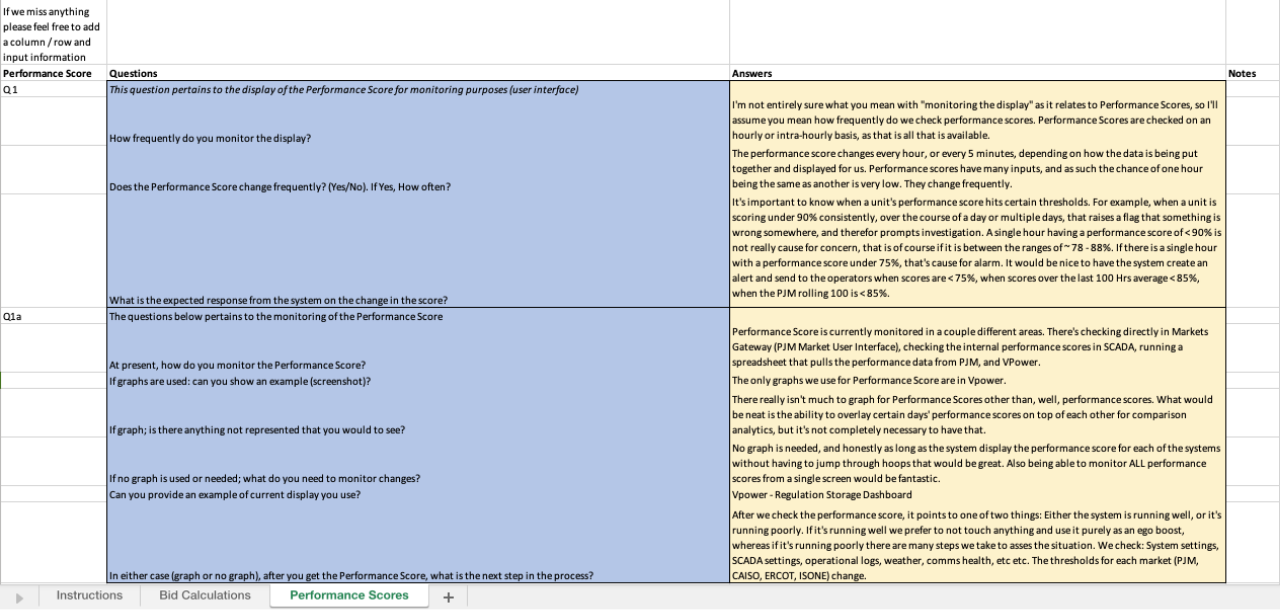
We sent this questionnaire to the NOC manager to get validation on our assumptions.
The System Analyst and I needed more information, so worked together on a questionnaire. Using Excel, we asked questions and left the answers to the NOC SME to best answer. We deployed it via email so that it could be worked on at a time of convenience for the Operator.
phase 4
ux individual deliverable
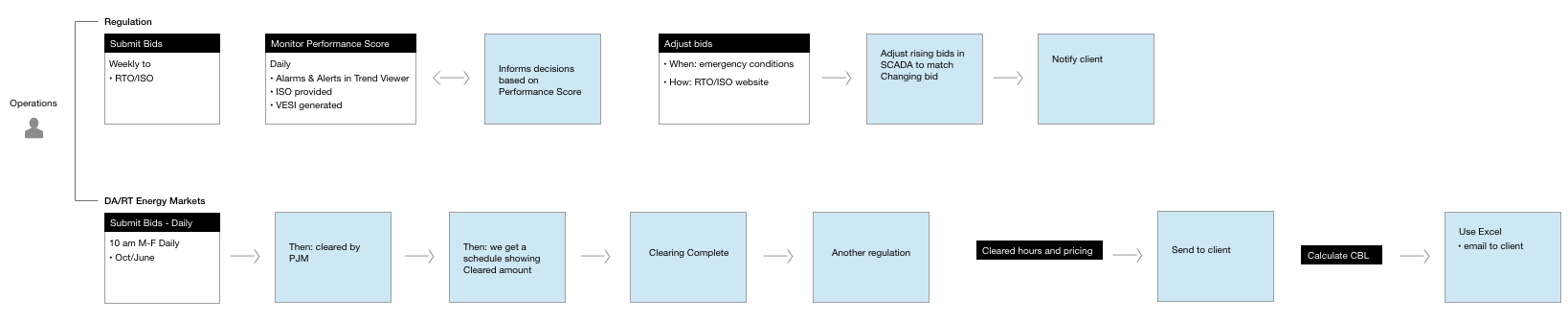
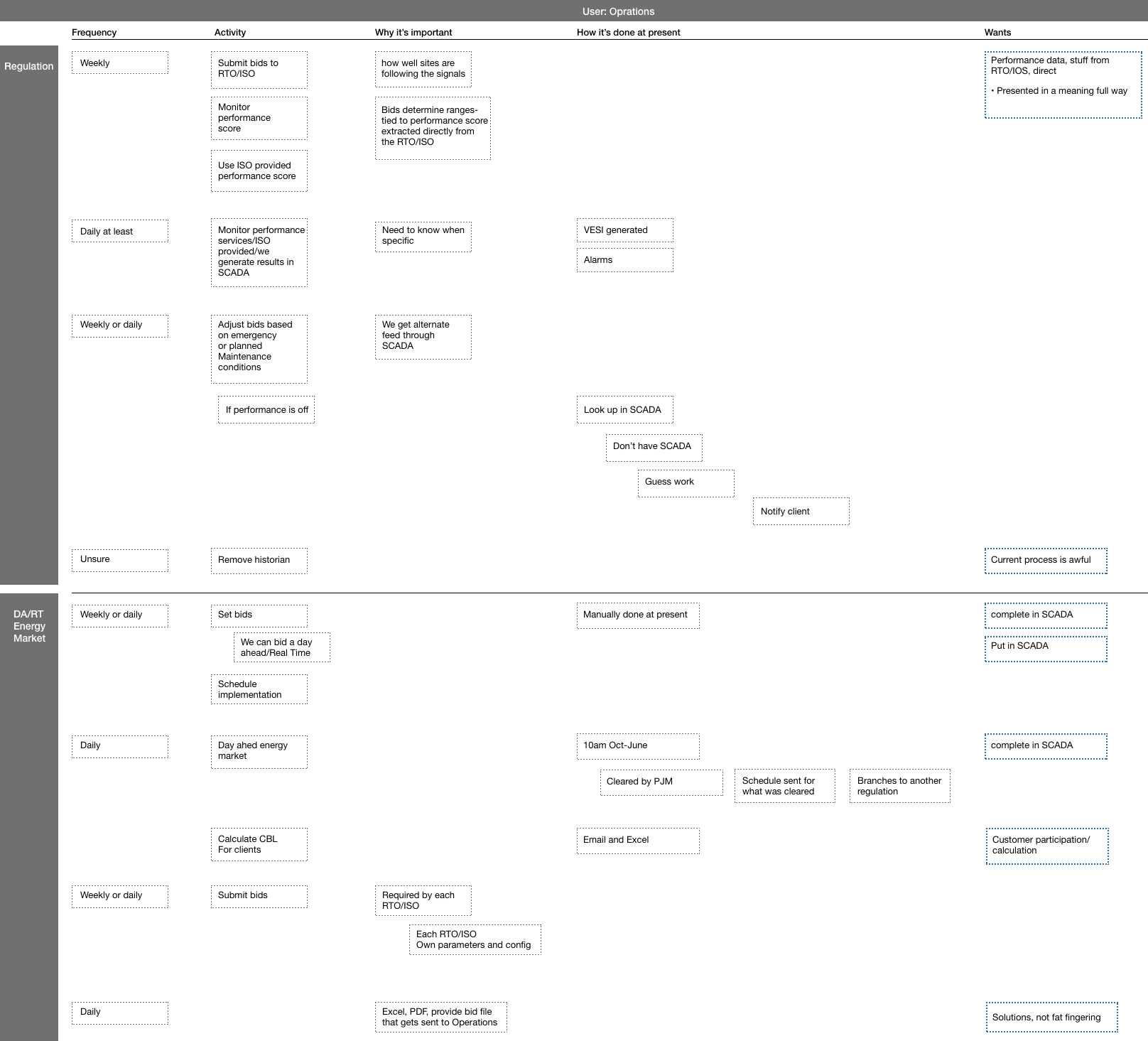
Knowing that we needed to fully understand the needs of both teams, I designed a Service Blueprint and Operations Diagram to surface the combination of activities we were going to build.
project outcome
The project was highly desired by both teams, including the Head of Operations, but after senior staff roadmap discussions, SkyShark was considered a lower priority than other projects.
Despite not being built, I consider this project a success. We made a lot of quick progress and earned the respect of the Operations and Finance teams for our both approach and organized methods. For me it felt validating to me that our shared manager, the Director of Software Engineering, allowed the System Analyst and myself to take ownership of this important project.